The feeding speed of the vibration disc for automatic material feeding in the CNC lathe is generally quite fast, typically ranging from 3000 to 10000 pieces per hour. However, the specific speed will be affected by the following factors:
Part factors
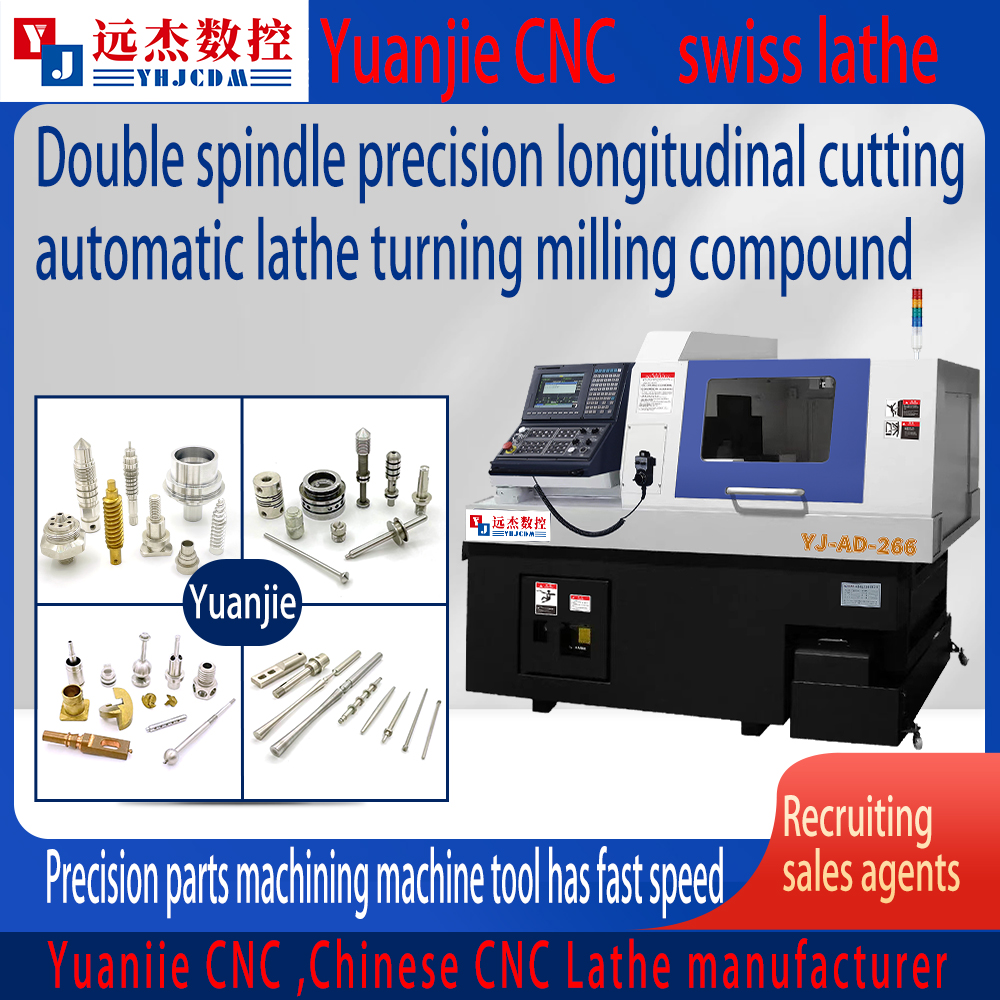
Part size and weight: Ultra-small parts (such as a micro shaft with a diameter of 0.05mm) are lightweight and susceptible to vibration, so they may require a reduction in vibration frequency and amplitude to ensure sorting accuracy. The speed will be relatively slower, possibly ranging from 3000 to 5000 pieces per hour; while larger and heavier parts (such as an axle with a diameter of 50mm) have high inertia and require stronger vibration to move, but once the appropriate vibration parameters are reached, the speed can reach 8000 - 10000 pieces per hour.
Part shape: Regular shapes (such as cylinders and cones) of parts move and sort along the track more smoothly, and the speed is faster; irregular-shaped parts (such as those with complex protrusions or depressions) may require special track design and screening mechanisms, and the speed will be limited, possibly ranging from 4000 to 7000 pieces per hour.
Vibration disc design factors
Vibration frequency and amplitude: By adjusting the on-off frequency and voltage amplitude of the electromagnet through the controller, the vibration intensity can be changed. High-frequency vibration (such as 150 - 200Hz) can make the parts move quickly, improving the loading speed, but an excessively high frequency may cause the parts to jump off the track; an appropriate vibration amplitude (achieved by adjusting the voltage) can also ensure the stable ascent of the parts, and if the amplitude is too small, the parts move slowly, and if the amplitude is too large, it may cause damage to the parts or disorder in sorting.
Track design: Optimized track cross-sections (such as precise V-shaped or U-shaped designs) and reasonable spiral angles can enable the parts to climb along the track more smoothly, reducing jamming phenomena, and thus improving the loading speed. If the track design is unreasonable, the parts are prone to get stuck, and the speed will significantly decrease.
Collaboration with CNC lathes factors
Sensitivity of photoelectric sensing system: A sensitive photoelectric sensing system can promptly detect the number of parts at the discharge port and accurately control the start and stop of the vibration disc. If the sensing system is not sensitive, it may cause the vibration disc to continue working, resulting in part accumulation and affecting the overall loading efficiency; or it may not start the vibration disc in time, causing the CNC lathe to wait for parts, reducing the production speed.
Linear feeder conveying speed: The speed at which the sorted parts are conveyed from the vibration disc to the CNC lathe fixture by the linear feeder needs to be matched with the processing rhythm of the lathe. If the conveying speed is too fast, it may cause the parts to accumulate at the fixture; if the conveying speed is too slow, the lathe will have a waiting situation for parts, which will affect the overall production speed.
A practical case: An automotive parts processing factory uses an automatic loading vibration disc to load parts onto CNC lathes for processing. The part diameter is 20mm, with a moderate weight and regular shape. The vibration disc uses an appropriate vibration frequency (120Hz) and amplitude (achieved by adjusting the voltage to an appropriate value), the track design is reasonable, the photoelectric sensing system is sensitive, and the linear feeder conveying speed is matched with the processing rhythm of the lathe. The final loading speed reached 9000 pieces per hour, greatly improving production efficiency.
Which aspect of the influencing factors of the vibration disc speed do you find more interesting? Or do you have any other questions regarding the vibration disc?


 Service
 Mobile website