Analysis of the Number of Axes in CNC Turning and Milling Machines
The number of axes in CNC turning and milling machines usually depends on their specific design and functional requirements. Let me give you a detailed explanation:
Common configuration of axes for CNC turning and milling machines
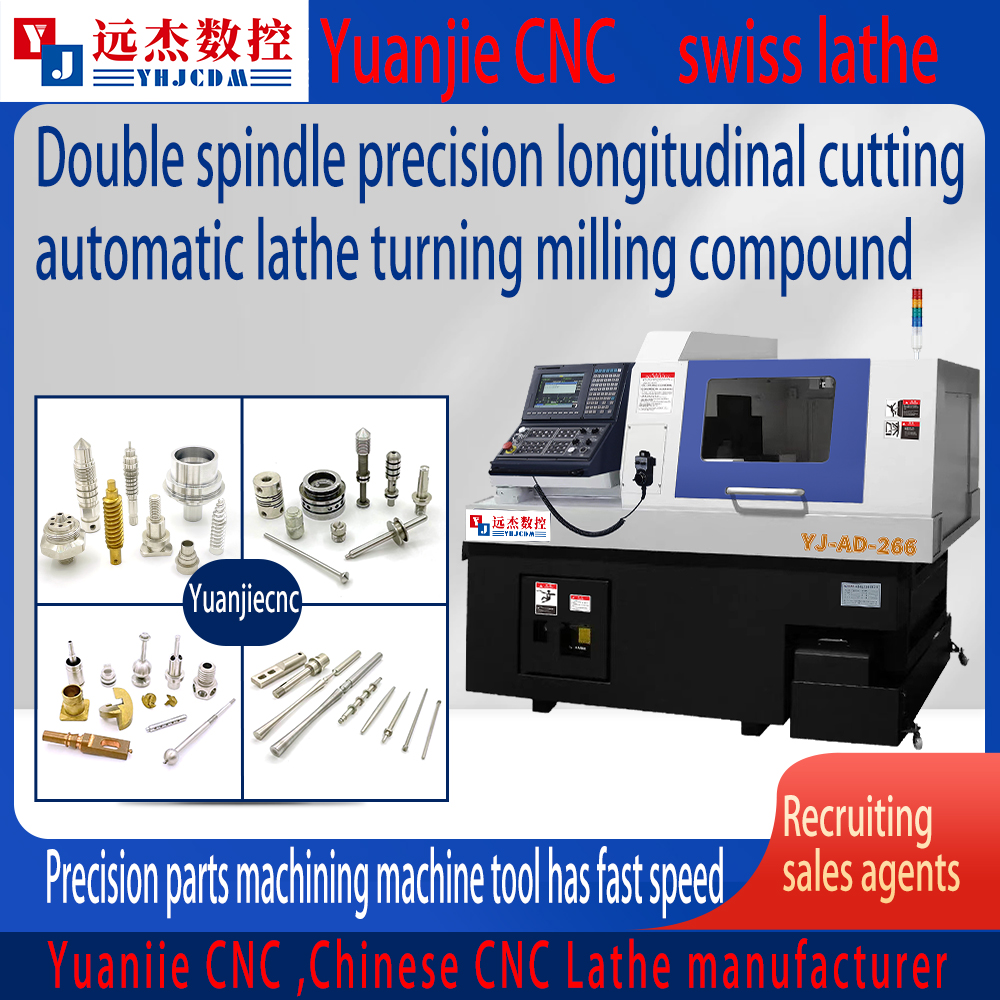
Basic configuration (5 axes):
Three linear axes (X/Y/Z)
Two rotational axes (two of A/B/C)
This is the most common configuration and can handle the processing of most complex parts.
Advanced configuration (6-7 axes):
3 linear axes
3 rotational axes
May also include additional linear or rotational axes
High-end configuration (8 axes and above):
For a dual-spindle + dual-tool-tower configuration
It can perform both turning and milling operations simultaneously
Recommendations for selection
When choosing a machining center for turning and milling, the number of spindles is not necessarily the higher the better. Instead, the following factors should be considered:
Your specific processing requirements
The complexity of the part
Production batch size
Budget constraints
Do you want to know about a specific type of turning and milling combined machine tool, or are you more interested in the technical principles of such equipment? I can provide more detailed information based on your specific needs.


 Service
 Mobile website